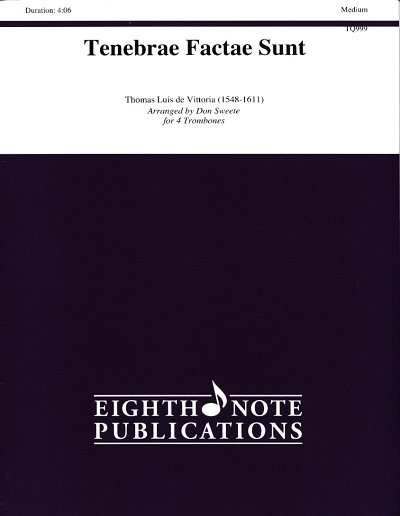
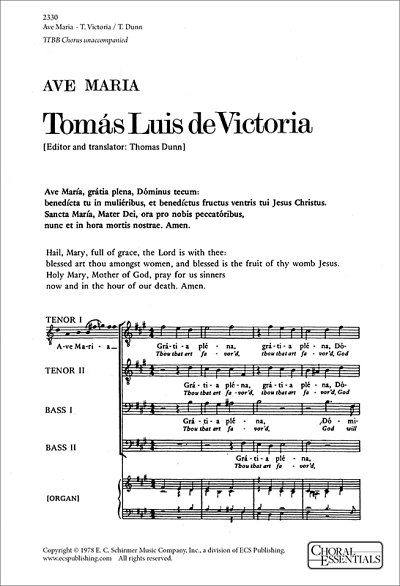
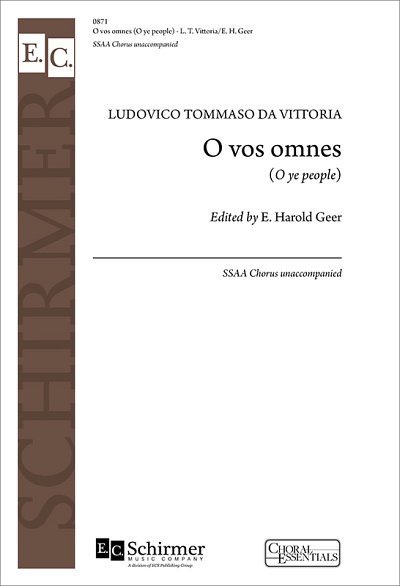
Tomás Luis de Victoria (1548*-1611) was one of the most important Spanish composers of the late Renaissance Period, and was instrumental in bridging the gap between the Renaissance and The Baroque Period. Browse our sheet music and scores, and explore all Victoria’s great works with Stretta Music today!
Tomás Luis de Victoria was born in Ávila, Spain, around 1548. At the local cathedral school, where he sung in the choir, he studied music theory, and above all, he started developing his organ skills.
In 1544, after his voice broke, he was sent to study at the Jesuit College in Rome. This "Collegium Germanicum" was founded in 1540 by the Jesuit Ignatius von Loyola, designed to teach modern music and literature. Here Victoria met many of the great personalities of his time, most importantly Giovanni Pierluigi da Palestrina.
From 1572, Victoria worked as a singer, organist and choral director, and began to compose regularly. He held positions at several Roman churches, and at the Collegium Germanicum. He was ordained a priest in 1575.
Around 1587, Victoria, exhausted by the constant struggle for money and work, decided to return to his homeland, and got a position as organist, choirmaster and personal chaplain to Queen Maria in Madrid. Here he had more time to compose, and he also revised many of his earlier compositions. Victoria died in 1611, and is buried in the Descalzas Reales monastery, where he spent more than 20 happy years.
Victoria wrote exclusively sacred music. His vocal polyphony, which follows on from Palestrina, often uses Spanish melodies. From 1580, Victoria started using more and more instruments along with the voices, mainly in the popular modern “colla parte” style. Towards the end of his life, he started using an early form of “basso continuo”, or figured bass, usually played by the organ or bassoon.
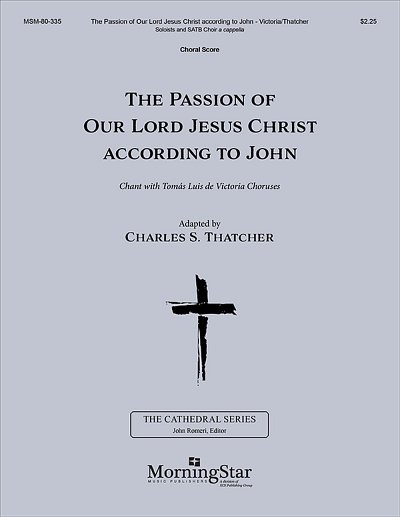
According to John
for: Soloists and SATB a Cappella
Choir score
Item no.: 906535
Novello Short Biographies
Book (softcover)
Item no.: 647345
for: Mixed choir (SATB); piano ad lib.
Choir score
Item no.: 1037912
for: Mixed choir (SATB); piano ad lib.
Choir score
Item no.: 1038648
18 Werke
for: Mixed choir (4 voices) a cappella
Score
Item no.: 766482
for: Mixed choir (SATB), piano
Choir score
Item no.: 315051
Geistliche Musik
for: Mixed choir (SATB), piano
Choir score
Item no.: 366293
for: Mixed choir a cappella
Item no.: 585245
Book
Item no.: 766601
Oxford Choral Classics Octavos
for: Choir
Choir score
Item no.: 332575
für 4-stimmigen Männerchor / für 3-stimmigen Männerchor
for: Male choir
Choir score
Item no.: 386473
4 Werke
for: Mixed choir (5–8 parts) a cappella
Choir score
Item no.: 683343
5 Werke
for: Mixed choir (5–8 parts) a cappella
Choir score
Item no.: 683352
Geistliche Musik
for: Mixed choir (SATB), piano
Choir score
Item no.: 315513
for: Choral
Item no.: 1374968
for: Choral
Item no.: 1374954
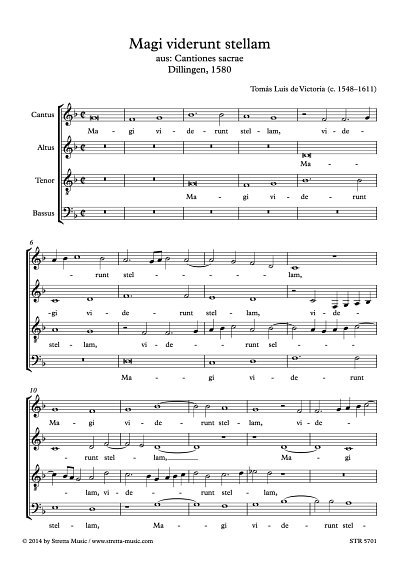
aus: Cantiones sacrae
Dillingen, 1580
for: Mixed choir (SATB) a cappella
Score
Item no.: 5701
(Father Most Holy)
for: Chor (SATB) a cappella
Choir score
Item no.: 880850
Männerchor
Chorpartitur
for: Männerchor (TBB) a cappella
Choir score
Item no.: 1620153
O ye people
for: Mixed choir (SATB); piano ad lib.
Choir score
Item no.: 901981
I Was Like a Lamb
for: Mixed choir (SATB); piano ad lib.
Choir score
Item no.: 1040509
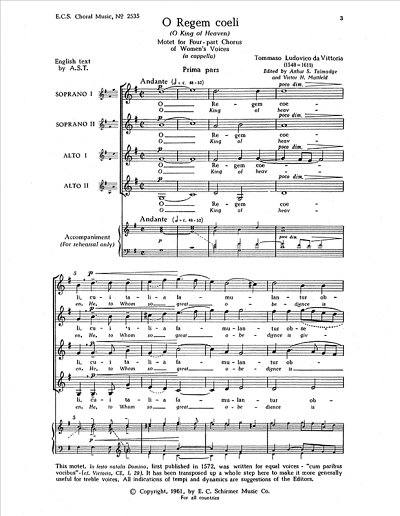
O King of Heaven
for: Women's choir (SSAA) a cappella
Choir score
Item no.: 1038628
Surely He Hath Bore Our Griefs
for: Mixed choir (SATB); piano ad lib.
Choir score
Item no.: 1038116
22 Motetten
for: Mixed choir (5 parts) a cappella
Choir score
Item no.: 641715
Sechs Werke
for: Mixed choir (5–8 parts) a cappella
Choir score
Item no.: 1660406
for: Women's choir (SSAA) a cappella
Choir score
Item no.: 1040553
for: Mixed choir a cappella
Music score
Item no.: 324867
für gemischten Chor a cappella
(Neuausgabe 2016)
for: Mixed choir (SSATTB) a cappella
Score
Item no.: 665016
for: Mixed choir (SATB) a cappella
Score
Item no.: 1337683
arrangiert für vier Posaunen
for: 4 trombones (ATTB)
Score
Item no.: 627714
Hail, Virgin Mary
for: Male choir (TTBB) a cappella
Choir score
Item no.: 1039852
Tenebrae Responsories No.15
for: Mixed choir (SATB), piano
Choir score
Item no.: 861014
O ye people
for: Women's choir (SSAA) a cappella
Choir score
Item no.: 1039323
Sechs Werke
for: Mixed choir (5–8 parts) a cappella
Choir score
Item no.: 683337
20 Motetten
for: Mixed choir (6 parts) a cappella
Choir score
Item no.: 683351
from Officium defunctorum à 6, 1605
for: SSATTB or SSATBarB
Einzelstimme
Item no.: 1159748
Responsorium der Weihnachtsmatutin
for: Mixed choir (SATB) a cappella
Score
Item no.: 1339488
SATB a cappella
for: Mixed choir (SATB) a cappella
Choir score
Item no.: 814960
for: gemischter Chor (dreistimmig); Klavier ad libitum
Choir score
Item no.: 1627881
for: Women's choir (SSAA) a cappella
Choir score
Item no.: 904824
And When the Day of Pentecost
for: Mixed choir (SSATB); piano ad lib.
Choir score
Item no.: 1037832
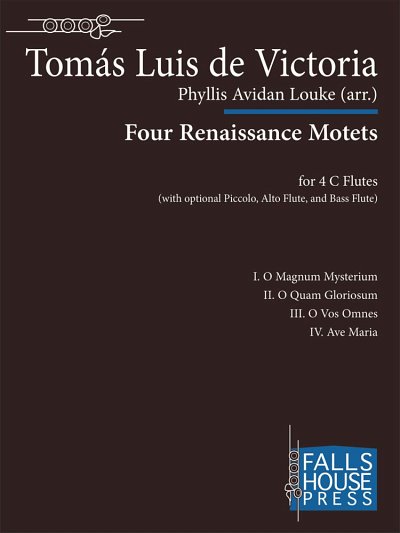
for Flute Quartet (or Flute Choir)
for: 4 Flöten (Flöten-Orchester)
Score, Parts
Item no.: 1351919
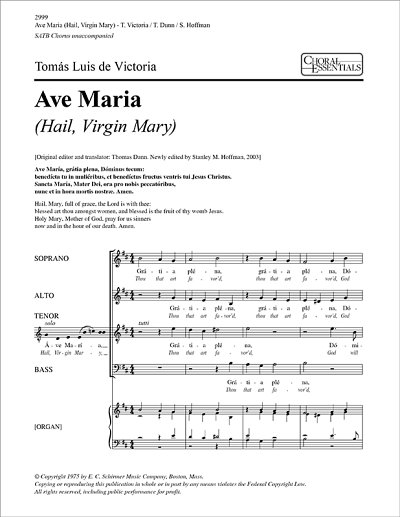
Hail, Virgin Mary
for: Mixed choir (SATB); piano ad lib.
Choir score
Item no.: 1037865
5 Werke
for: Mixed choir (4–8 parts) a cappella
Choir score
Item no.: 766598
for: Mixed choir (SATB); piano ad lib.
Choir score
Item no.: 1038488
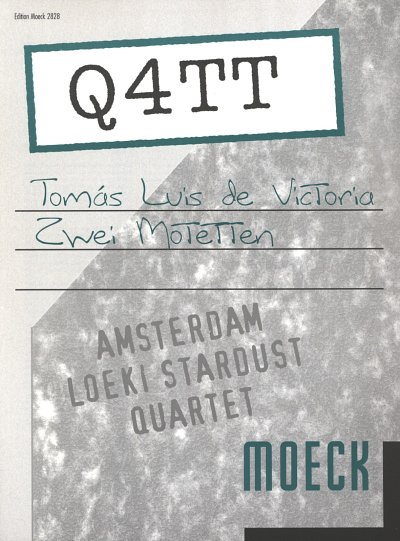
Q4TT
for: 4 recorders (SATB quartet)
Score, Set of parts
Item no.: 489145
GIA Choral Series
for: Mixed choir (SATB), piano
Score
Item no.: 1150210
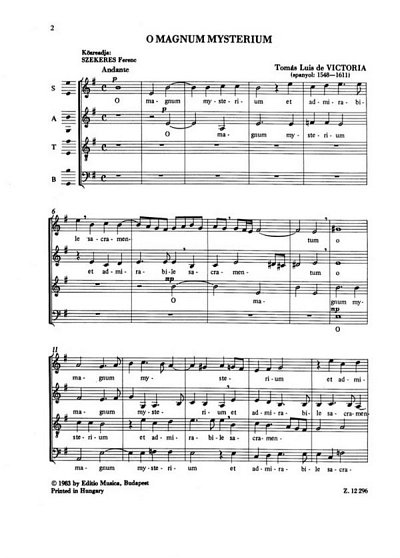
Old Masters' Mixed Choruses 41
Régi mesterek vegyeskarai 41
for: Mixed choir (SATB) a cappella
Choir score
Item no.: 850509



















© 2004–2024 by Stretta Music. Order and buy sheet music online.
Your specialist for all kinds of sheet music. Online shop, sheet music, music scores and play along for download, books, music stands, music stand lights, accessories.

 Germany
 Austria
 Switzerland
 Netherlands
 Belgium
 France
 Luxembourg
 Italy
Italy Spain
Spain Portugal
 Denmark
 Finland
 Sweden
 Poland
 Czech Republic
 Worldwide